
Scalp Health 101: How to Balance Oil, Reduce Flakes, and Support Healthy Hair Naturally
When you think of your scalp, most people don't typically think it has a ton to do with the health of your hair. At least, not immediatedly. Most people think of scalp health as the absence of dandruff and other fungal issues like itchiness or even scabbing.
You can even get into sun protection for the scalp, as many have learned the hard way that yes, the scalp still has fairly large unprotected areas that are just as prone to sunburn as any other skin. That's a topic we could spend a whole page on though. For purposes of this topic, we will stick to how your scalp health is tied to the overall health of your hair, and often helps determine how long your hair can grow, or how strongly it can promote new growth (with some genetic input too).
Topical Products Can Make All the Difference in Your Scalp Health
 For years, my husband and I had issues with dandruff, scabbing on the scalp, and uncomfortable itch. It wasn't until we switched off of the typical commercial products (even those targeted for dandruff control), that we experienced consistent relief and an almost total clearing of dandruff issues.
These commercial, mass-manufactured products often contained concentrated artificial fragrances, harsh variations of surfactant sudsing agents that strip important protections from the scalp, and chemical preservatives on top of it all, to promote a long shelf life.
After all, much like your skin has a delicate microbiome, so does your scalp. Your scalp is just skin covered by hair. It tends to have a different texture than exposed skin due to the fact that it can retain moisture more (hence the proclivity toward fungal growth), and does not get as much exposure to fresh air or sunlight than exposed skin. However it is still skin, and has many of the same microbiome elements.
How Scalp Health Shapes Hair Growth
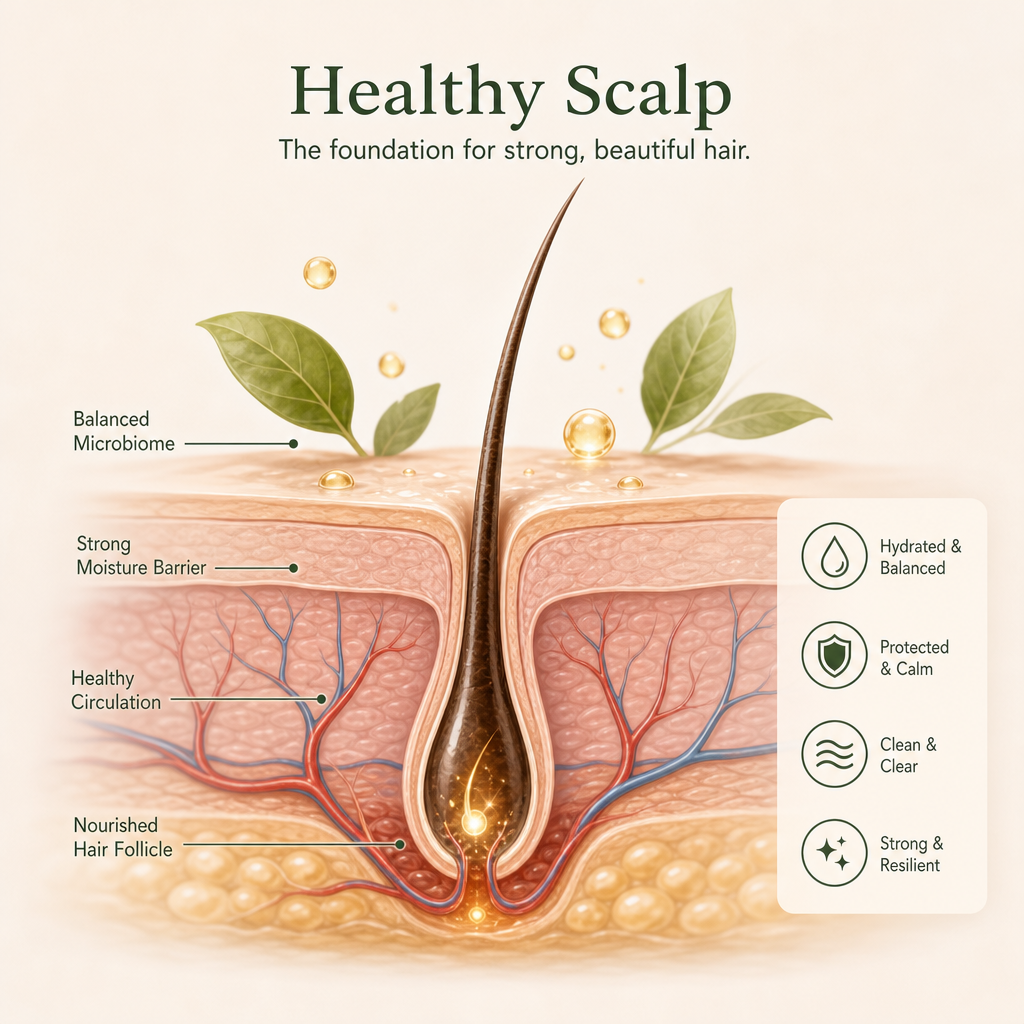
Most people think of hair health in terms of conditioners, serums, or styling products. But the real foundation of strong, healthy hair is the scalp. The scalp is living tissue, rich in blood vessels, nerve endings, and its own microbiome.
When this environment is balanced, nourished, and free from chronic irritation, hair follicles can function at their best. A healthy scalp supports stronger roots, better moisture retention, and more consistent growth cycles.
The Scalp Microbiome Matters More Than People Realize
Just like the skin on your face, the scalp has a microbiome - a community of beneficial bacteria and fungi that help regulate oil production, protect the barrier, and keep inflammation in check. When this ecosystem is disrupted by harsh shampoos, heavy silicones, synthetic fragrances, or overwashing, the scalp can become dry, itchy, or overly oily.
These imbalances can weaken the follicle environment, making hair more prone to shedding, breakage, and slow regrowth. Supporting the scalp microbiome with gentle, pH‑balanced, non‑stripping ingredients helps maintain a calm, stable foundation for healthy hair.
Circulation, Sebum, and Follicle Function
Another overlooked factor is circulation. Healthy blood flow delivers oxygen and nutrients to the follicles, which directly affects growth. Tight hairstyles, chronic tension, or inflammation can restrict circulation over time. Scalp massagers are a real winner here to promote circulation gently (make sure the rubber is flexible) - and as a powerful relaxation practice.
Sebum balance also plays a role — too much oil can suffocate follicles, while too little can leave the scalp dry and prone to micro‑cracks that trigger inflammation. Gentle cleansing, lightweight oils, and scalp‑friendly botanicals help maintain the right balance so follicles can stay active and productive.
Environmental and Lifestyle Factors People Often Miss
Many people don’t realize how much daily habits affect scalp health. Hard water, stress, diet, and even seasonal humidity can shift the scalp’s microbiome and barrier function. Product buildup from dry shampoos or heavy conditioners can clog follicles, while overwashing can strip protective lipids.
Even the pH of your shampoo matters — a slightly acidic pH helps keep the cuticle smooth and the scalp barrier intact. When these factors are managed well, the scalp becomes a healthier environment for hair to grow thicker, stronger, and more resilient.
Ready to learn more about sensitive skin and microbiome-friendly care? See below!
Vinegar Rinse Benefits for Hair and Scalp
Apple Cider Vinegar for Shiny, Healthy Hair (and Scalp)!
Is an Occasional Beer Rinse Really Good for Your Hair?
Can a Scalp Scrub Help Rejuvenate Scalp Health?
Rosemary Essential Oil Boosts Hair Growth, Dramatically Improves Scalp Health
What are the Haircare Benefits of Clary Sage Essential Oil?
Why Apple Cider Vinegar Is So Effective for Hair and Scalp Health
Keeping Long Hair Healthy Looking – Best Tried and True Tips & Tricks
Related Products:
- Natural Shampoo and Conditioner Combo Set
- Natural Hair & Body Care Gift Bag
- Natural Shine Enhancing Shampoo
- Deep Hydration Conditioner
FAQs:
Q: 1. How does the scalp microbiome influence hair growth?
A: A balanced scalp microbiome helps regulate oil production, maintain a healthy pH, and keep inflammation low — all of which support strong follicle function. When the microbiome is disrupted by harsh shampoos, heavy buildup, or overwashing, follicles can become stressed, leading to shedding, slower growth, and increased sensitivity.
Q: Can product buildup actually affect hair growth?
A: Yes. Dry shampoos, heavy conditioners, silicones, and styling products can accumulate around the follicle opening. This buildup can block oxygen flow, trap bacteria, and interfere with natural sebum movement. Over time, this can weaken the follicle environment and contribute to breakage or increased shedding.
Q: Why does scalp pH matter for hair health?
A: The scalp thrives in a slightly acidic pH. When products push the pH too high, the barrier becomes more permeable, making the scalp prone to dryness, irritation, and microbial imbalance. A healthy pH keeps the cuticle smooth, supports beneficial microbes, and helps maintain optimal conditions for hair growth.
Q: Does inflammation on the scalp affect hair thickness?
A: It can. Chronic inflammation — even mild, ongoing irritation — can disrupt the hair growth cycle. Inflamed follicles may produce thinner strands or enter the shedding phase more quickly. Keeping the scalp calm and balanced helps maintain fuller, stronger hair over time.
Q: How does circulation impact hair growth?
A: Hair follicles rely on steady blood flow to deliver oxygen and nutrients. Tight hairstyles, chronic tension, buildup, or inflammation can restrict circulation. Supporting scalp health with gentle massage, non‑stripping cleansers, and lightweight oils helps maintain healthy blood flow to the follicles.
Q: Can overwashing harm the scalp?
A: Yes. Washing too frequently strips away protective lipids and beneficial microbes, leaving the scalp dry, reactive, and prone to overproducing oil to compensate. This cycle can lead to irritation, flaking, and inconsistent hair growth. Gentle, balanced cleansing helps maintain a stable environment.
Q: What’s the biggest mistake people make with scalp care?
A: Most people focus on hair strands and ignore the scalp entirely. The scalp is living tissue — and if it’s irritated, stripped, or congested, hair growth suffers. Treating the scalp with the same care you give your facial skin makes a noticeable difference in hair strength, shine, and resilienc