
Sensitive Skin and the Microbiome: How to Build a Barrier-Friendly Skin Care Routine
What does 'sensitive skin' entail, or mean exactly?
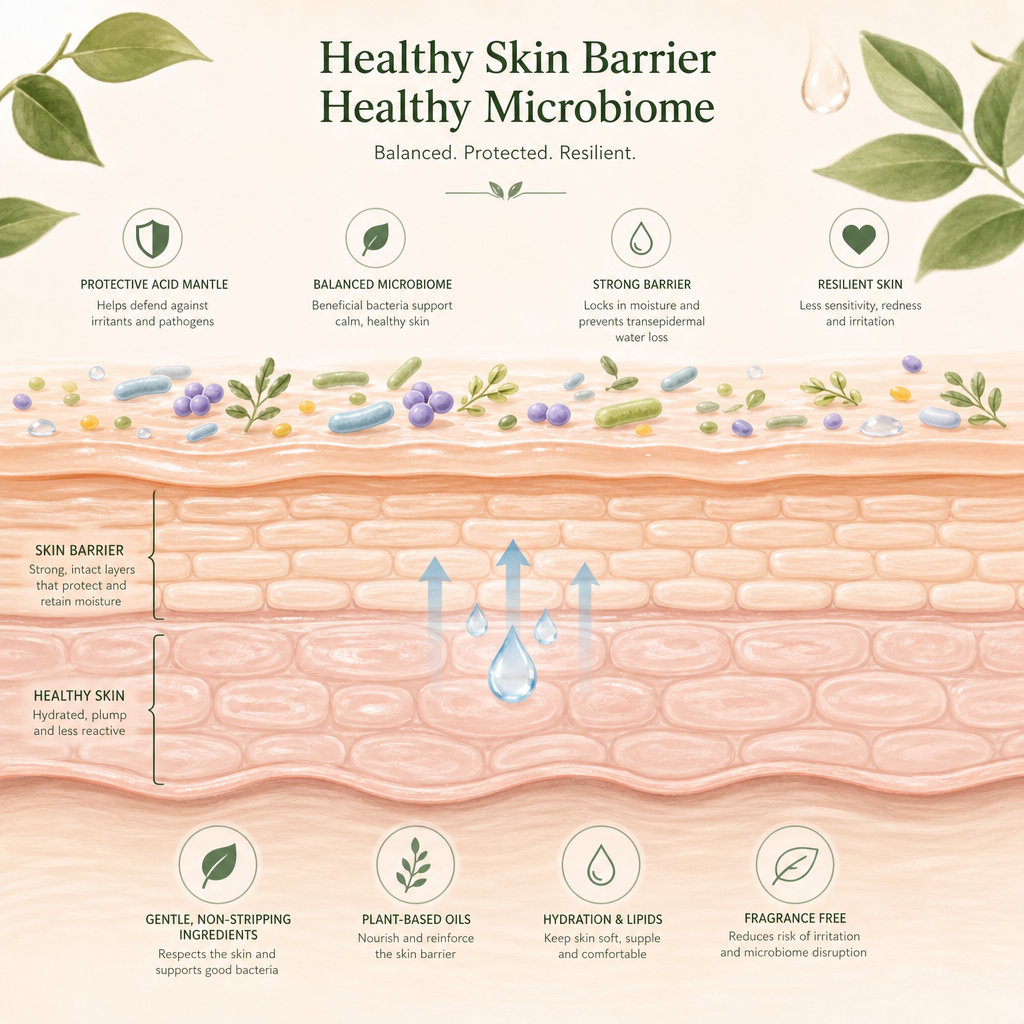
Sensitive skin isn’t just “easily irritated.” It’s skin with a fragile moisture barrier and a delicate ecosystem of beneficial bacteria that help keep it calm, balanced, and resilient. This important ecosystem is called the skin microbiome, and it plays a crucial role in how your skin behaves day to day.
When the microbiome is healthy, skin tends to feel smoother, less reactive, and better hydrated. When it’s disrupted, redness, dryness, breakouts, and irritation become far more common.
Sensitive Skincare Choices Need a Bit More Scrutiny
Many people don’t realize that everyday skincare ingredients can either support or disrupt this microbiome. Harsh surfactants, synthetic fragrances, chemical preservatives, and aggressive exfoliants can strip away the beneficial bacteria your skin relies on.
 When those microbes are depleted, the skin’s natural defenses weaken, making it more vulnerable to inflammation and environmental stressors. For sensitive skin, this disruption can be the difference between a calm complexion and a flare‑up.
Microbiome‑friendly ingredients work differently. Instead of stripping or sterilizing the skin, they help maintain the natural balance of beneficial bacteria. These ingredients tend to be gentle, non‑stripping, and supportive of the skin’s slightly acidic pH.
Plant‑based oils like jojoba, macadamia, kukui, and sunflower mimic the skin’s natural lipids, helping reinforce the moisture barrier without clogging pores or causing irritation. Mild cleansers and fragrance‑free formulas also play a key role, reducing the risk of microbiome disruption while still keeping skin clean and comfortable.
For people with sensitive skin, this approach can be transformative. When the microbiome is supported, the skin becomes more resilient and less reactive. Redness diminishes, moisture retention improves, and the barrier becomes stronger over time. Instead of constantly trying to “fix” irritation, clean microbiome‑friendly skincare helps prevent it at the source.
This is why choosing cleaner products formulated with gentle, microbiome‑supportive ingredients is so important. It’s not just about avoiding harsh chemicals—it’s about creating an environment where your skin can thrive naturally. By protecting the microbiome, you’re protecting your skin’s ability to heal, hydrate, and defend itself.
Microbiome‑friendly skincare is more than a trend; it’s a science‑backed approach that aligns perfectly with the needs of sensitive skin. When you choose products that respect your skin’s natural ecosystem, you’re choosing long‑term comfort, balance, and health. In the process, you are getting cleaner, healthier and simpler (shorter ingredient lists with things you can actually interpret) products that you can feel good about using every day.
Ready to learn more about sensitive skin and microbiome-friendly care? See below!
- Does Your Skin Have a "Microbiome" Ecosystem Like the Gut Has?
- Microbiome Friendly Skincare (Part II): What It Means and How to Support Your Skin’s Natural Balance
- What is Bakuchiol, and What Can It Do for Your Skin?
- Can Vitamin B3 Help Your Skin in More Ways Than One?
- Cod Liver Oil – Remedy for Multiple Skin Issues AND “Internal Sunscreen”? My Experience
- Avoiding Sulfates Can Save Your Skin and Hair
- Should You Avoid Sulfates?
- Why Avoid Artificial Fragrances?
- Vitamin C Ester | Part I
- Vitamin C Ester the Better C Version for Sensitive Skin | Part II
- Why Use an Unscented Bar Soap or Cleanser?
- Avoiding Petroleum in Personal Care – What to Look For
- Ingredients in Natural Deodorant - Microbiome-Friendly Odor Control for Sensitive Skin
- Natural Alternatives to Toxic and Irritating Antibacterials
- Petroleum Free Products
Related Products:
- Natural Deodorant Balm
- Sulfate Free Unscented Soap
- Sulfate Free Crisp Citrus Body Wash
- Sulfate Free Warm Citrus Soap
FAQs
Q: Are there other parts of our bodies aside from the gut and skin that have a 'microbiome'?
A: Yes there are other parts of our amazing bodies that have a microbiome, or ecosystem, of their very own! Just a few examples of organs or parts of the body with a microbiome are:
- The mouth - Yes! There are organisms in the mouth that are considered harmful, like excess bacteria, and there are organisms that are considered beneficial. Plentiful saliva creates an environment where the teeth are less likely to decay and become overrun with harmful bactera. Dry mouth can cause more issues than just discomfort.
- The mammary glands - The mammary glands found in a woman's breast can be home to beneficial organisms, but also susceptible to harmful ones. Since this can determine the quality of breast milk passed on to an infant, it's important that the mammary glands remain healthy, balances and functional. Infant breast milk can also contain a plethora of built in immune-boosting antibodies which rely on mammary health to stay intact.
- Lungs - We breathe in more than just oxygen. Think of the number of contaminants and irritants that are in the air we breathe every day. Our lungs contain a delicate balance of microbes that help defend our lung tissue from harm. Smoking, vaping and frequent inhalation of various air pollutants can really compomise the health of our lung tissue and the delicate natural ecocystem that protects them.
Q: Does the health of my skin’s microbiome affect how quickly it heals when it’s irritated or damaged?
A: Yes. A balanced, healthy microbiome strengthens your skin’s natural protective barrier, which plays a major role in how well your skin recovers. When your lipid layer is intact and not constantly disrupted by harsh products, your skin is better equipped to repair itself, stay resilient, and tolerate everyday irritants.
Q: How does a disrupted microbiome show up on my skin?
A: When the microbiome becomes unbalanced, you may notice more redness, dryness, breakouts, or sensitivity. A weakened barrier makes skin more reactive to products, weather, and environmental stressors.
Q: Can harsh cleansers or fragrances damage the microbiome?
A: Yes. Over‑cleansing, agressive exfoliants, strong surfactants, and synthetic fragrances can strip away beneficial bacteria and lipids, leaving the skin more vulnerable to irritation and dehydration.
Q: Are microbiome friendly products only for sensitive skin?
A: Not at all. While sensitive skin benefits the most, microbiome‑friendly formulas support every skin type by strengthening the barrier and improving long‑term resilience.
Q: Can diet or gut health influence the skin’s microbiome?
A: They can. The gut and skin communicate through the immune system, so inflammation or imbalance in the gut can show up as sensitivity or breakouts on the skin’s surface.