
Sulfates and Scalp Health
Sep 20th 2026
 Can Sulfates Compromise Scalp Health? Understanding Potential Stripping, Microbiome Disruption, and Gentler Alternatives
Do Sulfates Compromise Scalp Health?
For years, sulfates have been at the center of a heated debate in haircare. Ingredients like sodium lauryl sulfate (SLS) and sodium laureth sulfate (SLES) are widely used because they create that rich, satisfying lather people associate with “clean.”
But as consumers become more aware of scalp biology, microbiome balance, and barrier function, a natural question emerges: Can sulfates compromise scalp health? The answer isn’t a simple yes or no - it depends on concentration, frequency of use, and individual sensitivity.
Sulfates are powerful surfactants designed to lift away oil, dirt, and buildup. That’s their job, and they do it well. The issue is that they don’t discriminate between excess sebum and the natural lipids your scalp needs to stay balanced.
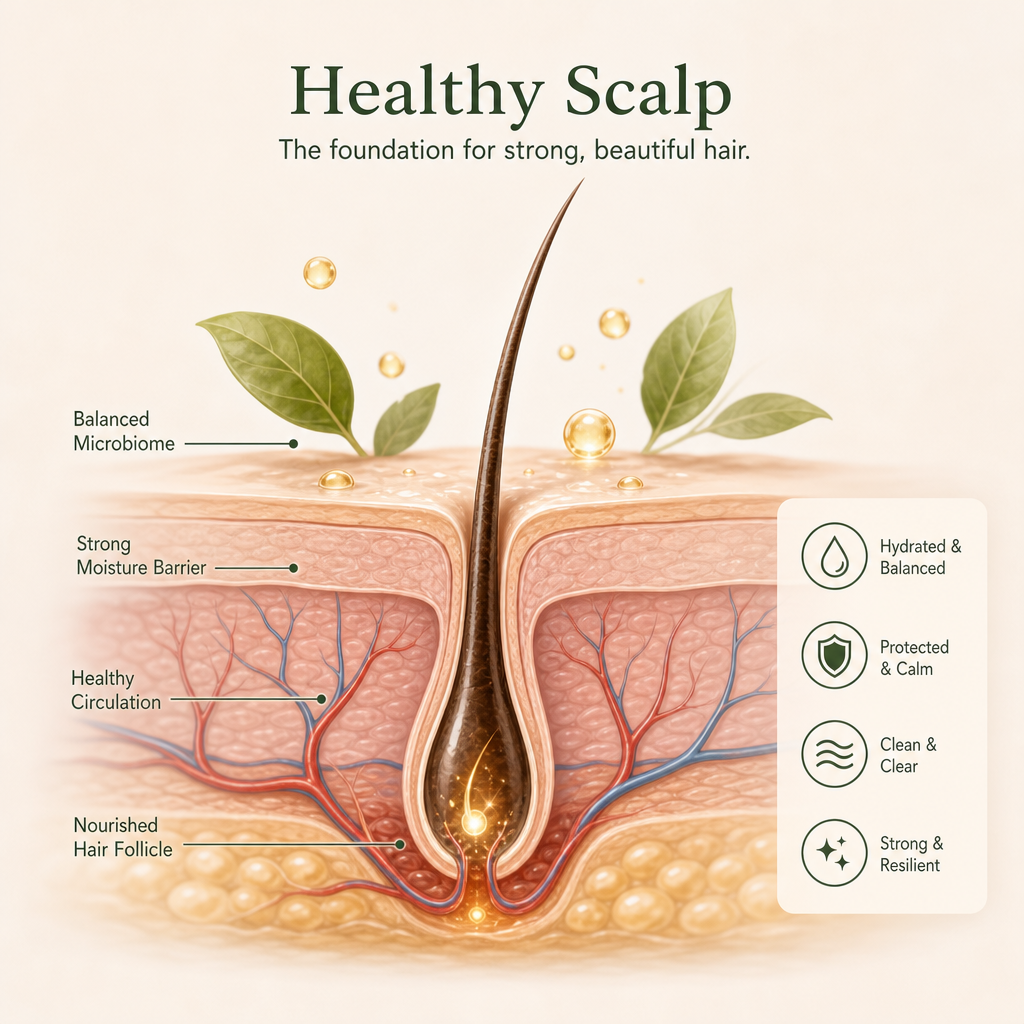
When sulfates are used in high concentrations or paired with other harsh cleansing agents, they can strip the scalp’s protective barrier. This barrier - made of lipids, ceramides, and beneficial microbes - helps regulate moisture, maintain pH, and keep inflammation in check. When it’s disrupted, the scalp can become dry, tight, itchy, or reactive.
Can They Disrupt the Scalp Microbiome?
One of the biggest concerns with sulfates is their potential to disturb the scalp microbiome, the community of microorganisms that help maintain a healthy environment for hair follicles. Of course, it will depend on the ratio and type of sulfates used in any given formula, and some ingredients will actually help offset any harsh or irritating effects. Related: Do Sulfates Weaken the Hair?
A disrupted microbiome can lead to increased sensitivity, flaking, or even overproduction of oil as the scalp tries to compensate for what’s been stripped away. For people with conditions like eczema, psoriasis, or seborrheic dermatitis, sulfate-heavy formulas can exacerbate symptoms and trigger flare‑ups.
However, it’s important to note that sulfates themselves aren’t inherently “bad.” In fact, they’re safe, well‑studied, and effective when used appropriately. Many people can use sulfate shampoos without any issues.
Problems tend to arise when formulas rely on high levels of SLS, lack conditioning agents to offset the cleansing strength, or are used too frequently on already sensitive or dry scalps. In other words, the context matters.
Hair Type
Another factor is hair type. Individuals with curly, coily, or textured hair often experience more dryness because their natural oils don’t travel down the hair shaft as easily. For them, sulfate shampoos can lead to increased frizz, brittleness, and moisture loss.
On the scalp, this can translate to irritation or imbalance. Meanwhile, people with very oily scalps may feel that sulfates give them a “clean slate,” but even they can experience rebound oiliness if the scalp is stripped too aggressively.
There’s also the question of pH. Healthy scalp pH sits slightly acidic, usually between 4.5 and 5.5. Some sulfate-heavy formulas can skew more alkaline, which lifts the cuticle and disrupts the scalp barrier.
This can make the scalp more vulnerable to irritation and environmental stressors. Modern formulations often address this by adjusting pH and adding soothing ingredients, but not all products are created equal.
So, do sulfates compromise scalp health? They can, but not universally. For many people, especially those without sensitivity, a well‑formulated sulfate shampoo used occasionally is perfectly fine.
For others - particularly those with dry, irritated, or microbiome‑disrupted scalps -gentler alternatives like cocamidopropyl betaine, sodium cocoyl isethionate, or glucoside-based surfactants offer effective cleansing without the harshness.
Ultimately, the best approach is to pay attention to how your scalp responds. If you notice tightness, flaking, increased oiliness, or irritation after washing, sulfates may be playing a role. Choosing a balanced, non‑stripping formula can help maintain a healthier scalp environment, support the microbiome, and promote stronger, more resilient hair growth over time.
FAQs:
- Can sulfates damage the scalp’s natural barrier?
Yes. Strong sulfates like SLS can strip essential lipids, which may weaken the scalp barrier and lead to dryness or irritation.
- Do sulfates disrupt the scalp microbiome?
They can. Over‑cleansing with harsh surfactants may disturb the scalp’s microbial balance, contributing to sensitivity, flaking, or oil imbalance.
- Are sulfate shampoos bad for sensitive or dry scalps?
Often, yes. Sensitive, dry, or eczema‑prone scalps are more likely to react to sulfate-heavy formulas, especially when used frequently.
- Can sulfates cause scalp irritation or itching?
Yes. High concentrations of sulfates may trigger itching, tightness, or redness in people with reactive or compromised scalp conditions.
- Are there gentler alternatives to sulfate shampoos?
Absolutely. Surfactants like glucosides, betaines, and isethionates cleanse effectively without stripping the scalp’s moisture barrier. Related: Throwback! Announcing Our New Shampoo
- Do sulfates affect scalp pH?
They can. Some sulfate formulas lean alkaline, which may disrupt the scalp’s ideal pH range and contribute to irritation or imbalance.
- Is it safe to use sulfate shampoos occasionally?
For many people, yes. When well‑formulated and used sparingly, sulfate shampoos can be part of a balanced hair‑care routine without harming scalp health.
Looking for more information about scalp health and hair biology? See Scalp Health and Hair Biology