
Microbiome Friendly Skincare (Part II): What It Means and How to Support Your Skin’s Natural Balance
Jul 19th 2026
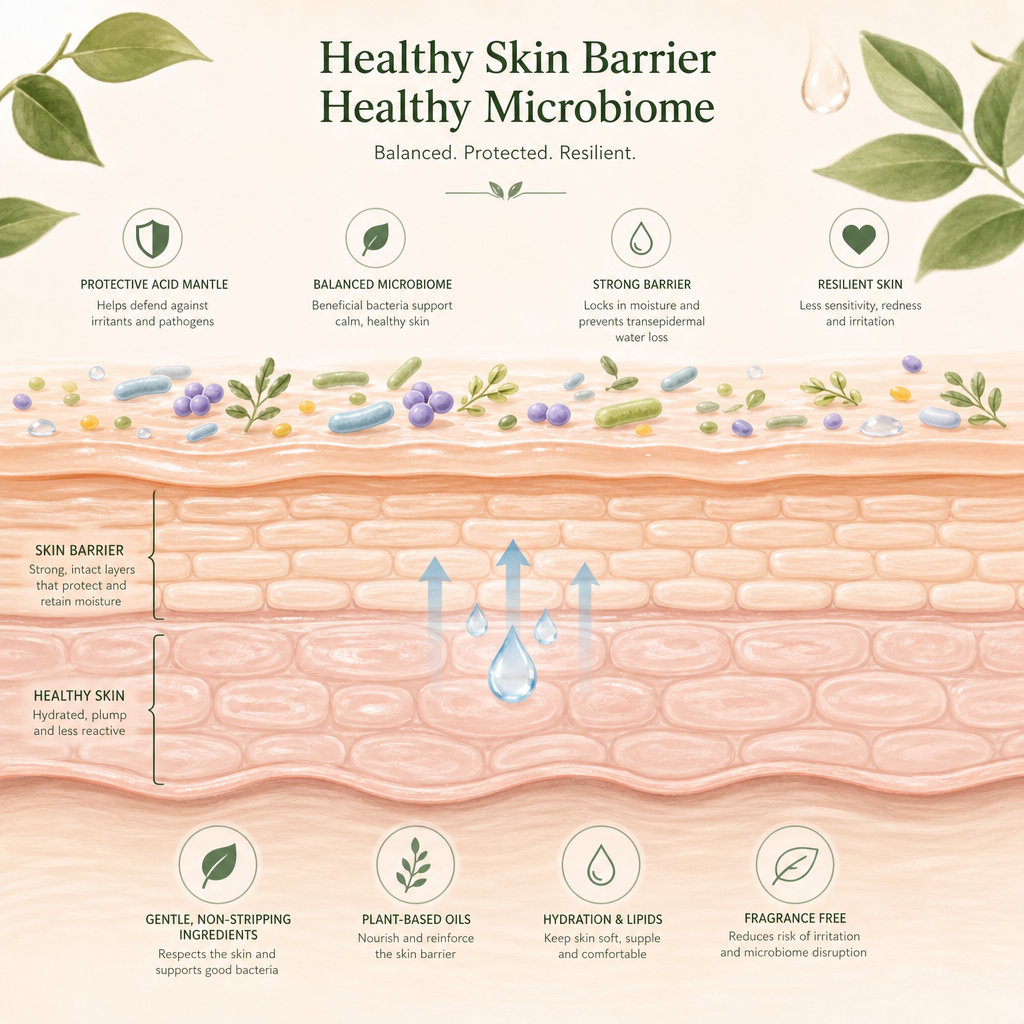 Welcome to Part II of this important topic! Be sure to read Part I Skin and the Microbiome too. “Microbiome friendly skincare” is one of those newer beauty terms that sounds almost pseudo-scientific or new age, but in actuality, very practical. At its core, it means skincare that supports, rather than disrupts, the community of beneficial microorganisms living on your skin.
Let’s talk about what this functionality means in skincare, and why it matters - especially for sensitive, acne prone, or easily irritated skin.
What “Microbiome Friendly Skincare” Actually Means
Your skin is home to billions of beneficial bacteria, fungi, and microbes that protect you. This ecosystem is called the skin microbiome, and it acts like a natural defense system. Just as you have a microbiome in your digestive and elimination organs, your skin, which is the largest organ you have, also has its own ecosystem.
Related: Does Your Skin Have a Microbiome Like the Gut?
Microbiome friendly skincare refers to products and routines that:
- Don’t disrupt this ecosystem
- Don’t strip or sterilize the skin
- Don’t kill off beneficial bacteria
- Don’t alter the skin’s pH
- Don’t overload the skin with irritants or preservatives
Instead, they support the microbiome so it can do its job: keeping skin balanced, calm, hydrated, and resilient.
What It Targets (the problems it solves)
Microbiome friendly skincare is especially helpful for people dealing with:
- Sensitive or reactive skin
A disrupted microbiome is strongly linked to redness, irritation, stinging, and chronic sensitivity.
- Acne prone skin
When the microbiome is out of balance, acne bacteria can flourish. Supporting the microbiome helps reduce breakouts naturally.
- Dry, flaky, or compromised skin barrier
A healthy microbiome helps maintain the moisture barrier and reduce transepidermal water loss.
- Over exfoliated or over treated skin
Retinoids, acids, benzoyl peroxide, harsh cleansers and synthetic fragrances can strip the microbiome. Microbiome friendly care helps restore balance.
- Dandruff, scalp itchiness, or fungal imbalance
The scalp microbiome is just as important as the facial microbiome. Gentle surfactants combined with ecofriendly essential oils and carrier oils keep this ecosystem in tune with your body’s natural chemistry. Related: How Scalp Health and Hair Biology are Related
Microbiome friendly products typically:
- Use gentle surfactants
- Avoid harsh sulfates
- Avoid synthetic fragrances
- Avoid heavy preservatives
- Maintain a slightly acidic pH (like ACV rinses)
- Include plant oils that mimic natural sebum (jojoba, macadamia, kukui, argan)
- Avoid stripping ingredients
- Support the moisture barrier with fatty acids and antioxidants
Examples of Beneficial Organisms Living on the Skin:
One of the best examples — and probably the most important one — is Staphylococcus epidermidis. It’s a beneficial bacterium that lives on healthy skin and plays a huge role in keeping the skin calm, balanced, and protected.
Here’s why it matters (and why “microbiome friendly skincare” is such a big deal):
Staphylococcus epidermidis: The Skin’s Protective BFF
This microbe is part of your normal skin flora, and it does several things that directly support skin health:
- It helps keep harmful bacteria in check
- Epidermidis produces natural antimicrobial peptides that suppress Staphylococcus aureus, the troublemaker associated with eczema flares, infections, and inflammation.
- It supports the skin barrier
It helps maintain the slightly acidic pH of the skin, which keeps the barrier strong and discourages pathogenic bacteria.
4. It reduces inflammation
A balanced population of S. epidermidis helps calm redness and irritation — especially important for sensitive or reactive skin types.
5. It communicates with your immune system
It helps “train” the skin’s immune response so it reacts appropriately rather than overreacting (which can lead to chronic inflammation).
Other Beneficial Skin Microbes
If you want a broader picture, here are a few more good guys:
- Cutibacterium acnes (formerly Propionibacterium acnes)
Yes — the same species associated with acne also has beneficial strains.
Some strains help keep the skin balanced, reduce inflammation, and maintain healthy sebum composition. Acne happens when the wrong strains overgrow.
- Malassezia globosa (in balance)
This yeast is part of the normal scalp microbiome.
When balanced, it helps regulate oils.
When overgrown, it contributes to dandruff — which is why ACV, jojoba, and kukui can help rebalance it.
- Corynebacterium species
These help maintain the skin’s natural acidity and support barrier function.
Looking for more information about sensitive skin and microbiome-friendly skincare? See Sensitive Skin and Microbiome-Friendly Care